


ValleyHUB connects locally grown food to nearby schools, organizations, paves way for future partnerships as part of Good Food for Michigan Project
LANSING, Michigan – The Michigan Department of Agriculture and Rural Development (MDARD) on Wednesday highlighted the success of ValleyHUB Food Hub at Kalamazoo Valley Community College, an innovative partnership that provides locally grown foods to organizations that serve children, students and families across the region.
Leaders highlighted the successful project as a model for additional partnerships with schools, hospitals and other institutions across Michigan as part of the newly announced Good Food for Michigan Project.
The ValleyHUB Food Hub received a Farm Stop Grant from MDARD in 2025 to improve distribution and help meet demand for locally grown, nutritious food. ValleyHUB distributes locally grown products to nearby institutions and organizations, including YWCA Kalamazoo.
“In southwest Michigan, ValleyHUB works with nearly 40 farmers and food producers to bring more local foods to everyone from young children in day care at the YWCA to students at Kalamazoo Public School to adult learners at Kalamazoo Valley,” said Dr. Tim Boring, the director of MDARD. “We are excited to tap into our state’s rich agricultural heritage to create similar local food partnerships that connect our farmers to schools, hospitals and more through the Good Food for Michigan Project.”
ValleyHUB works closely with partner organizations to provide fresh food to a number of local organizations that serve community members in need. Connecting farmers in southwest Michigan to local organizations and schools helps the farming community.
“Local sales of fresh, nutritious produce provide revenue for local farms, and that means local farmers can keep doing what they do best,” said Rachel Bair, director of ValleyHUB. “We look forward to welcoming additional programs like ours to ensure that more food grown in Michigan is served on Michigan tables, helping our farmers and our communities across the state.”
Kalamazoo Valley Community College is committed to ensuring that the next generation of food service professionals are prepared to support good food purchasing initiatives.
“Graduates of our degree and workforce programs are working in good jobs with organizations like YWCA and Kalamazoo Public Schools, where they are thriving and contributing to the betterment of our community,” said Dr. Paige Eagan, provost and vice president for Instruction and Student Services of Kalamazoo Valley.
YWCA Kalamazoo is dedicated to helping families through a range of programs, including its high-quality childcare program called The Dreamery.
“YWCA Kalamazoo’s Food Justice Program is informed by research and rooted in social justice,” said LynAnn VanDyk, director of Food Justice Programs at YWCA Kalamazoo.
“We know that in the first 5 years of life, children’s neurological pathways set in millions of ways, including for lifelong food preferences, based on the types and variety of foods experienced in early childhood. Young children who eat farm fresh will be more likely to try new foods throughout early childhood and as they grow older, and they will consume more fresh produce even as young adults. Kids with fresh diets, like what’s served at YWCA, will see improved cognitive functioning in the classroom today and for many years later.”
The Good Food for Michigan Project, a partnership between MDARD and the Center for Good Food Purchasing, is the result of collaboration between state agriculture officials, farmers and community groups. The program connects locally grown, nutritious food to schools, hospitals and other institutions that serve meals to Michiganders every day. The project will help community organizations to:
- Assess their food procurement practices
- Meet good food purchasing targets
- Create plans to diversify their vendors and suppliers to include local and regional food sources
“ValleyHUB is building a healthy and sustainable food system in southwest Michigan,” said Alexa Delwiche, executive director at the Center for Good Food Purchasing. “We look forward to creating similar projects across the state that strengthen local supply chains and help more schools, hospitals and organizations to buy nourishing Michigan-grown products.”
The Good Food for Michigan Program uses a model that equips schools and other institutions with the tools and technical support they need to source and procure locally grown foods. The program emphasizes the importance of strengthening local and community-based economies, improving community health and supporting a valued workforce.
The Good Food for Michigan Project complements other innovative MDARD programs focused on strengthening regional food systems. In its first year, MDARD’s Farm to Family Program has awarded more than $730,000 to support food hubs and farm stops that give Michigan producers and consumers more opportunities to sell and buy locally grown foods.
MDARD’s website has more information about efforts to improve Michigan families’ access to nutritious, locally grown foods.

Michigan Department of Agriculture and Rural Development director Dr. Tim Boring gathered with representatives from ValleyHUB Food Hub at Kalamazoo Valley Community College to highlight their initiative that is serving as a model for partnerships to provide locally grown food to institutions across Michigan.
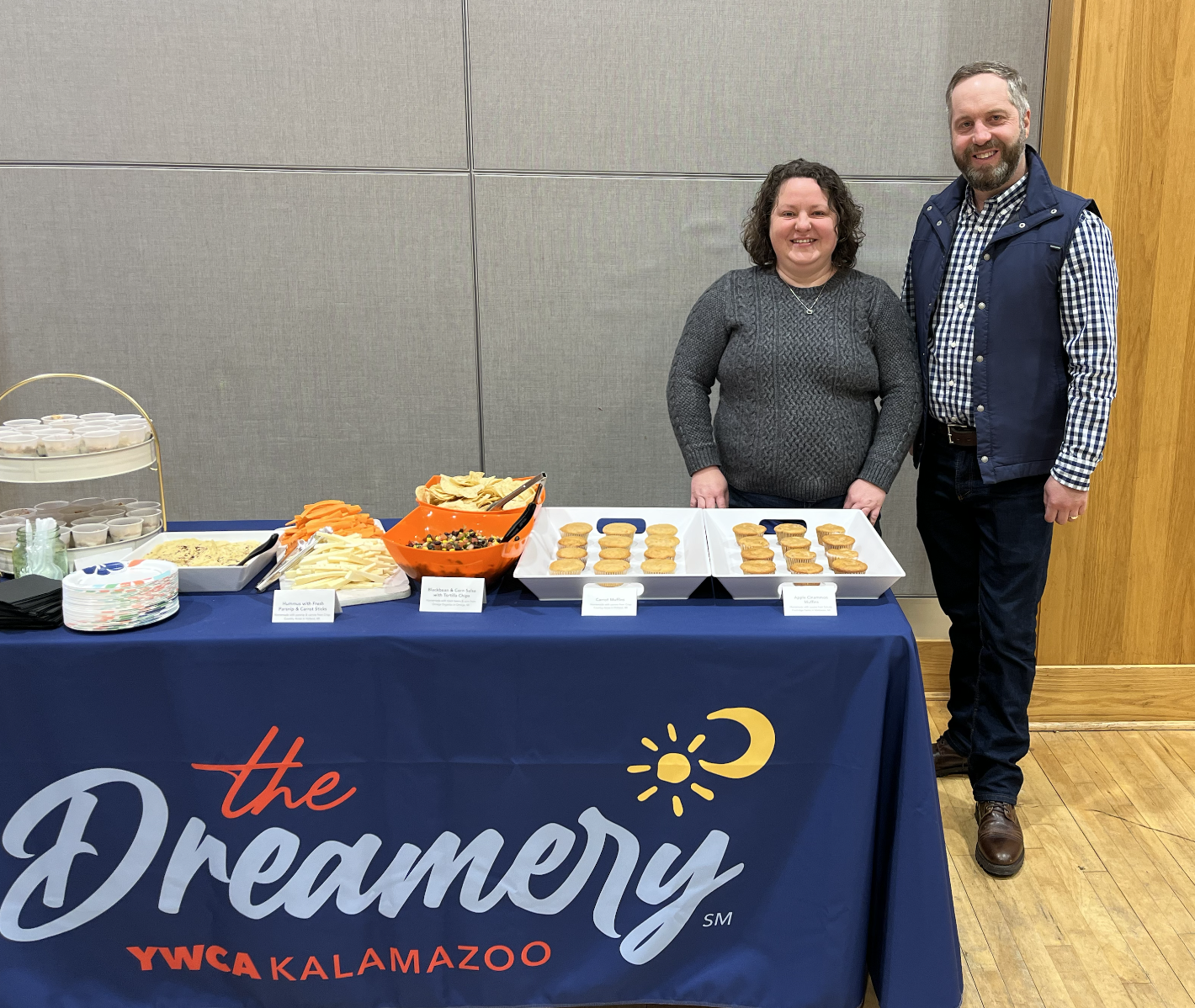
Robyn and Bill Schultz, of Schultz Fruitridge Farms in Mattawan, participate in a press conference with representatives from the Michigan Department of Agriculture and Rural Development (MDARD) and representatives from ValleyHUB Food Hub at Kalamazoo Valley Community College to highlight the benefits of providing locally grown food to community organizations such as YWCA Kalamazoo.


