

This year marked the 10th anniversary of the Center, and a time of both shocking upheaval and equally stunning efforts to sustain, rebuild, and transform our systems for a better tomorrow.
The end of the year is exhausting. Time for reflection is hard to come by, between work deadlines, school obligations, and everything at home. It’s overwhelming in any year.
And of course, this was not just any year.
Because of — not despite — the state of the world, our team and our partners worked hard. We moved fast. We steeled our resolve and channeled every ounce of our talents and determination into our work (read all about it below), especially the Power of Procurement summit. Knowing how essential it was for our community to come together during so much turbulence and pain kept us going. The three days we spent together this fall in Chicago were hopeful, energizing, and joyful, a space for laughter, honesty, tears, fears, and dreams shared openly.
After bringing the excitement of a PoP reunion six years in the making to a full boil, it was time to slow down, allow our learnings to simmer, digest. To begin making sense of what we heard, what we need, and where we go from here.
Our team has spent countless hours talking with summit partners and attendees, reading session notes, absorbing survey results and private feedback, and watching recordings. Through the din of distressing news and endless chatter, listening to these incredible leaders speak is a balm. (We invite you to listen too, or read through the inspirational quotes we’ve pulled in the event recap.)
On Krista Tippett’s Hope Portal podcast, she defines hope in this way:
“Hope is a leap of imagination that has real-world consequences. It looks reality in the face and refuses to accept that things have to be this way. This orientation of hope throws one’s intelligence, energy, persistence, creativity, and courage behind that insistence.”
This community is a living practice of that definition: It’s our collective calling, privilege, and responsibility to imagine a different future and bring it into being.
We invite you to continue the momentum with us: Read the PoP25 event recap, view the beautiful photos, watch the session recordings, share your thoughts on the path forward that we offer, and most importantly, declare your commitment to co-creating this hopeful future by signing the Chicago Good Food Purchasing Declaration.
2025 Snapshot

When analyzing institutions with more than one assessment completed:
Partner Institution Highlights
The Center’s Program Team worked closely with 14 institutions to support their completion of action plans:
Rush University Medical Center
St. Louise Regional Hospital
O’Connor Hospital
Santa Clara Valley Medical Center
East Baton Rouge Parish Schools
Pittsburgh Public Schools
Boston Public Schools
Lake Travis Independent School District
Cincinnati Public Schools
Fresno Unified School District
Georgia Institute of Technology
Montgomery County Department of Corrections & Rehabilitation
Cook County Juvenile Temporary Detention Center
Cook County Sheriff’s Office
Good Food Purchasing Program institutions reached unprecedented levels of achievement in 2025, innovating solutions and employing smart strategies to drive change across the country. The Center is proud to spotlight three of the many GFPP partner institutions who raised the bar this year and are shaping a promising vision for the impact Good Food leaders can share with their communities.

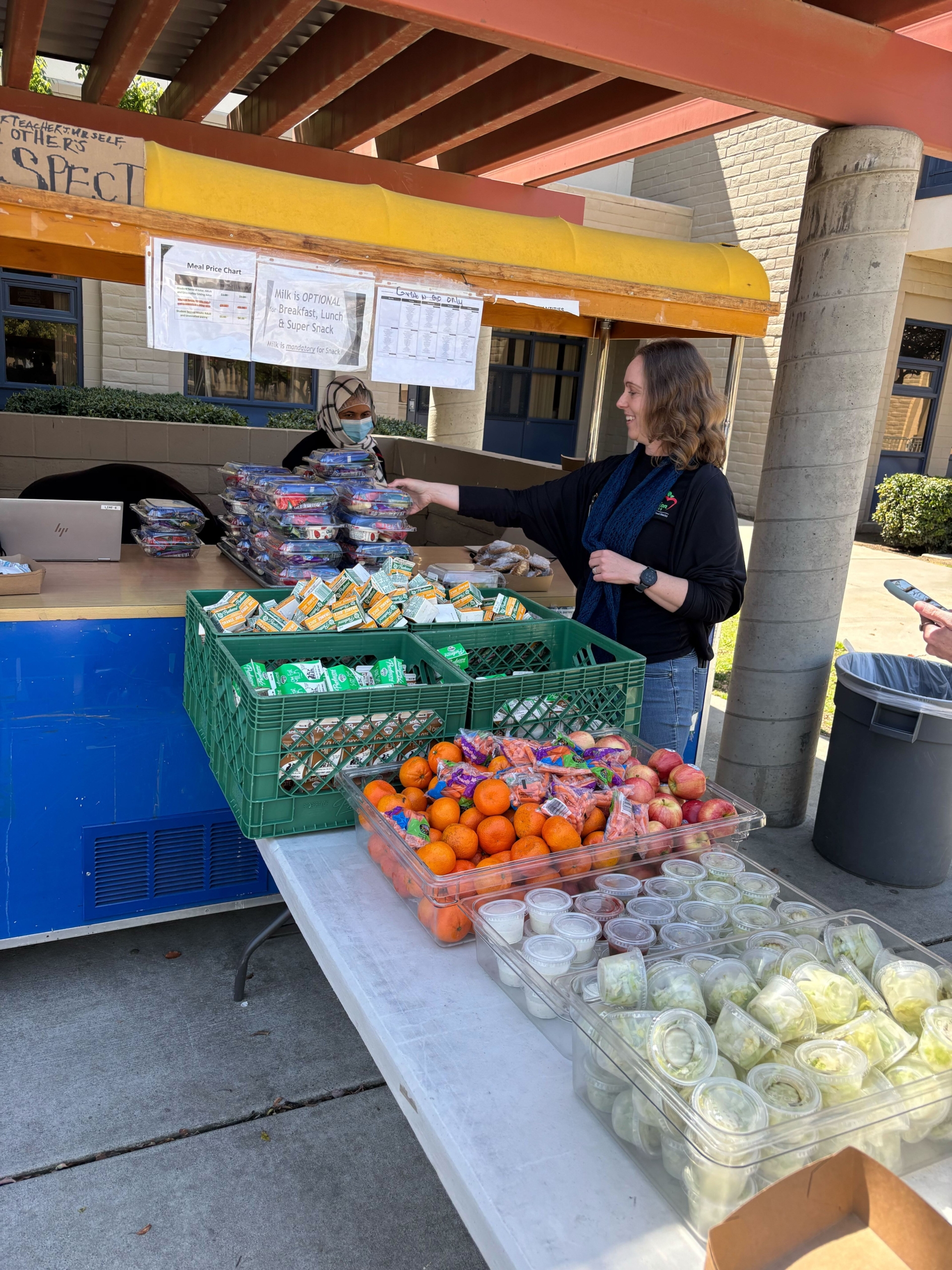
Credit: Fresno Unified School District
Fresno Unified School District’s completion of their school year 2023-2024 Good Food Purchasing Assessment documented the district has earned Good Food Leader: Silver seal for outstanding commitment and excellence in the program, including progress across values categories and implementation of additional purchasing strategies.
Fresno USD met baseline targets in three value categories: Local and Community Based Economies, Environmental Sustainability, and Valued Workforce. The district invested $5.4 million in qualifying local items, keeping those funds in the local economy and prioritizing more resilient supply chains. Of that local spend, $3.9 million was spent with suppliers within 50 miles of Fresno, showing a commitment to hyperlocal purchasing.
The Fresno Unified School District’s commitment to a food system with safe and healthy working conditions included $1.7 million spent with suppliers or distributors with a union contract, representing a 5% increase from their 2021-2022 program assessment. The district also continued to meet the program’s nutrition checklist target, based on efforts including making fruits, vegetables, whole grains, and whole or minimally processed foods available; implementing community health and nutrition education programming for students and staff; and working with vendors to offer reduced sugar versions of products.
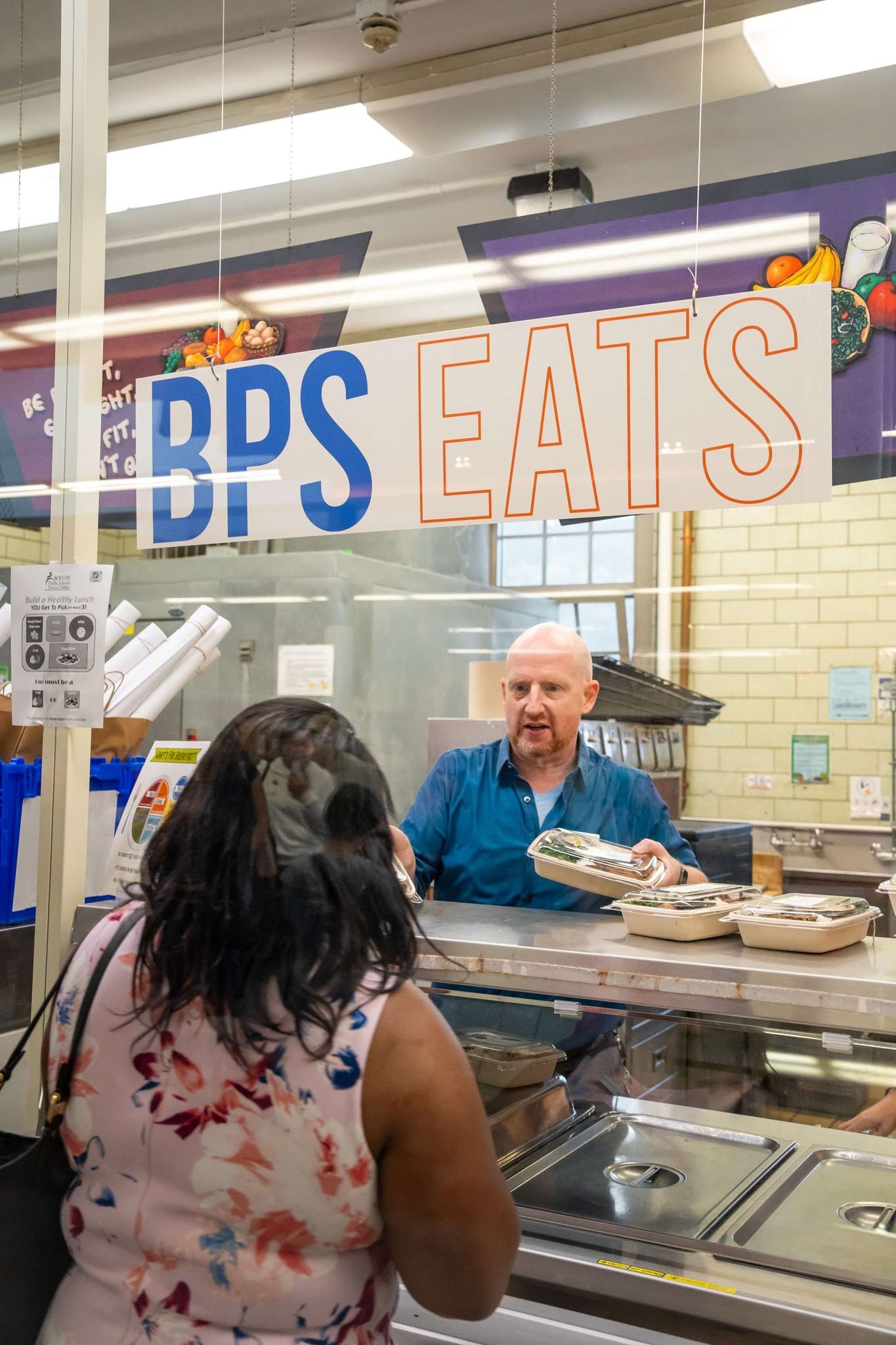
Credit: Boston Public Schools
In Boston Public Schools’ second annual Good Food Purchasing Program assessment, the district reported outstanding Good Food Purchasing best practices to earn Good Food Leader: Silver status. Across a total food spend of nearly $17.9 million, BPS made progress across each of the Good Food Purchasing Program value categories, with particularly strong performance in Local and Community Based Economies, Environmental Sustainability, and Community Health and Nutrition.
During the 2023-2024 school year, BPS exceeded its Local and Community Based Economies target, investing over $3 million in the New England economy, including with food incubation and entrepreneurial empowerment partner Commonwealth Kitchen, which developed several new locally-sourced products piloted by BPS. The district reduced the carbon footprint per meal while sourcing 70% of chicken purchases from suppliers that do not routinely administer antibiotics. Boston Public Schools also exceeded its Valued Workforce target through purchasing relationships with union-backed suppliers.
Read More:
Boston Public Schools’ Food Service Program Earns National Recognition For Fresh, Nutritious, Locally Sourced School Meals
City of Boston, Oct. 21, 2025
National food service nonprofit increases BPS ranking for school meals
Boston Herald, Oct. 21, 2025
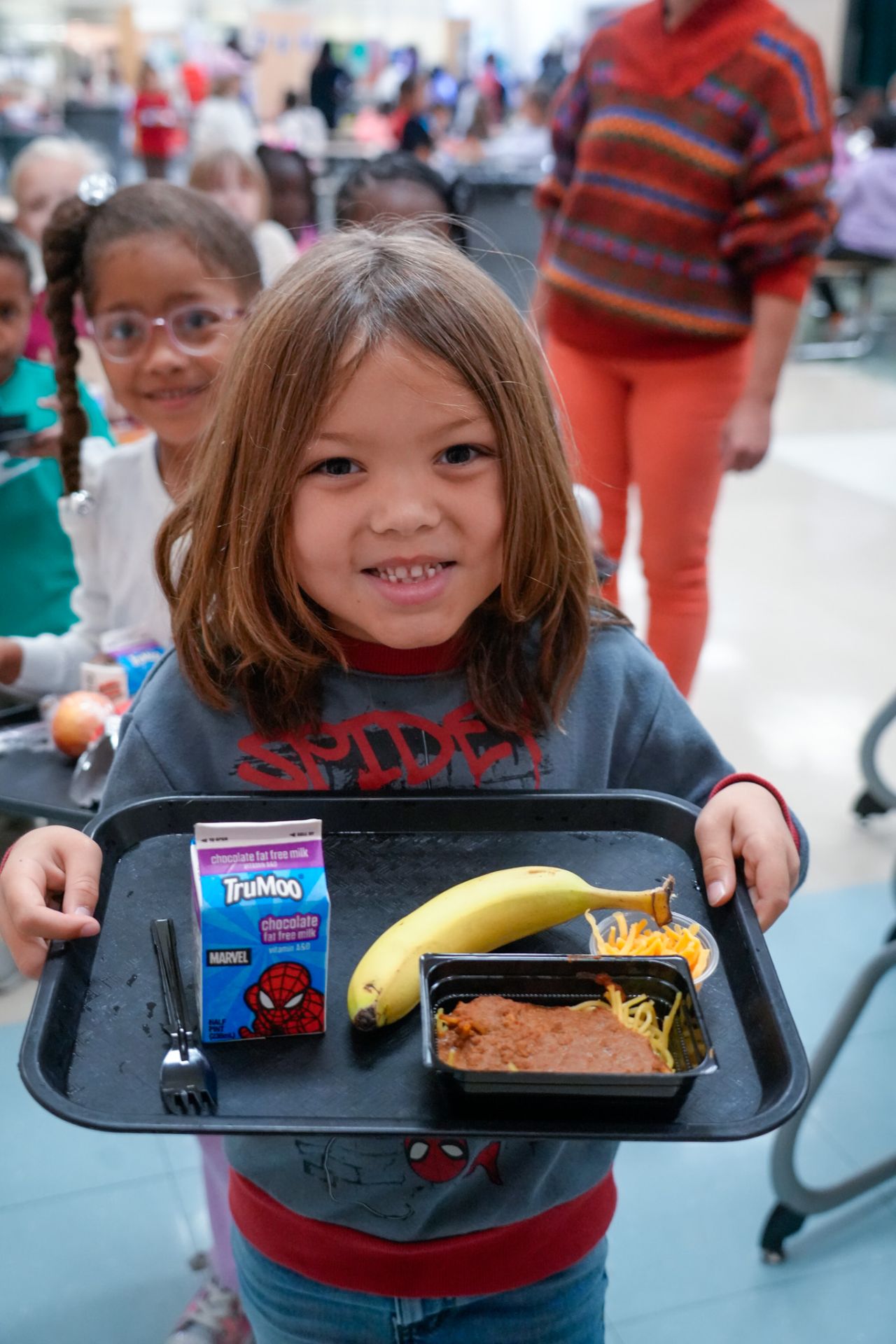
Credit: Cincinnati Public Schools
Cincinnati Public Schools participated in its seventh assessment under the Good Food Purchasing Program, and has met the requirements for Good Food Leader: Silver status. CPS has demonstrated strong commitment and leadership in the program by offering creative approaches to menuing and nutrition tracking, developing thoughtful relationships that enabled the district to meet all five Equity, Accountability and Transparency (EAT) targets, and employing 14 Additional Strategies, including one in each value category.
CPS invested $2.1 million (18.7% of total spend) in products from family or cooperatively-owned businesses in the local region, 10% of which was from socially disadvantaged suppliers.
The district’s success also includes meeting the baseline goal in Environmental Sustainability for the first time, achieving a 19.4% Carbon and Water Footprint reduction from the 2021-2022 assessment, eliminating seafood listed as “Avoid” by the Monterey Bay Aquarium Seafood Watch, and conducting food waste auditing to inform reduction strategies.
Within the Good Food Purchasing Ecosystem
New Collaborations
Strategic partnerships with organizations, institutions, and funders have strengthened connections – and created new pathways – to good food purchasing and the support systems that make it possible for growers and buyers alike.

Get Schools Cooking
This year, the Center completed the first phase of our project with Chef Ann Foundation, supporting their fifth cohort of Get Schools Cooking enrollees. Enrolled districts received a baseline assessment from the Center and will receive a follow-up assessment early next year, demonstrating how scratch cooking can initiate more good food purchasing.
Farm-Based Food Hubs
In collaboration with Fresh Approach, Supply Change, Community Alliance with Family Farmers, and Stanford University, the Center supported farm-based food hubs to gain access to institutional markets. Many of these hubs were activated through USDA Local Food Purchasing Agreements that supported local, fresh produce access via food banks. With hubs’ know-how already in place, this project helps them build new markets in the absence of federal funding.
School Ecosystem Collaboration
Thanks to a generous collaboration grant from the Waverley Street Foundation, the Center kicked off a collaborative grant project with Chef Ann Foundation and Future Generations University. The project will demonstrate how organizations like ours can work together to provide wrap-around support to a school food ecosystem – from food purchasing and scratch cooking to farm-based education. The project will also develop a messaging toolkit that inspires small rural and urban districts to invest in this holistic approach.
Regional Activations
Local, regional, and national leaders traveled from near and far to arrive at the Power of Procurement summit in Chicago to collaborate within and across cohorts representing regions including Atlanta, GA; Austin, TX; Bay Area, CA; Boston, MA; Buffalo, NY; Chicago/Cook County, IL; Cincinnati, OH; Washington, DC; Denver, CO; Illinois; Los Angeles, CA; Michigan; New Haven, CT; North Carolina; Minneapolis; Mississippi; New Mexico; New York City/New York state; and Pittsburgh, PA. We look forward to continued collaboration across this interconnected network as part of the ongoing Good Food Purchasing ecosystem planning process.

Photo credit: Lake Travis ISD
Meanwhile, key successes in regions including Texas, Massachusetts, California, and Michigan cultivated new opportunities and Good Food connections across the country. Incredible collaboration across Central Texas this year has cultivated the formation of an official Central Texas Farm to School Collaborative, spearheaded by Marissa Bell of Lake Travis Independent School District. Lake Travis ISD also completed their first action plan under the Good Food Purchasing Program and has launched their first ever local procurement RFP, paving possibilities for new local sourcing opportunities for LTISD and the broader region. In addition, long-time GFPP partner Austin Independent School District kicked off their eighth GFPP assessment, made possible with support of the City of Austin and collaborative efforts to move towards broader regional procurement goals laid out in the Austin-Travis County Food Plan.
In Massachusetts, the Center acted as a partner and participant in a project led by the City of Boston’s Office of Food Justice and the Green Ribbon Commission to activate Boston-area anchor institutions to develop plans to increase their purchase of Good Food. With Boston Public Schools reaching Good Food Leader: Silver status in 2025, it is now more important than ever that other area anchors support BPS’s great work and join the effort to influence the New England region.
Good Food for Michigan
The Center for Good Food Purchasing is partnering with the Michigan Department of Agriculture and Rural Development (MDARD), Byrum & Fisk Advocacy Communications, and the Michigan State University (MSU) Center for Regional Food Systems to launch the Good Food for Michigan Project, which will focus on keeping values-aligned, locally grown food in Michigan communities.

Good Food for Michigan is a product of MDARD Director Tim Boring’s conversations with growers and community groups around the state who have expressed concerns about the strain federal policies are putting on food access and affordability, as well as with those who voiced a desire for more opportunities to feed their communities with local foods. Through this collaboration, Good Food for Michigan partners will work closely with Michigan institutions to assess their food procurement practices and work toward specific Good Food Purchasing targets related to local and community-based economies, environmental sustainability, animal welfare, valued workforce, community health and nutrition, and equity, accountability, and transparency.
Partners also will create supplier/vendor diversification plans that include local and regional food sources; develop and implement comprehensive institutional policies that reflect community needs and values; and increase consumption of locally grown foods to target health outcomes, support local farmers, and reduce environmental costs of food production and transportation.
Visit MDARD’s website for more information about efforts to improve Michigan families’ access to nutritious, locally grown foods.
Good Food Purchasing California Collaborative
This year, the Center for Good Food Purchasing and project partners Fullwell, Community Alliance with Family Farmers, and Los Angeles Food Policy Council officially kicked off a new Good Food Purchasing California collaborative. This project is the result of a successful United States Department of Agriculture (USDA) Regional Food System Partnership grant application to link Good Food Purchasing Program efforts across the state of California.
Good Food Purchasing California has established a new regional collaborative to connect and amplify impacts of advanced good food purchasing initiatives in Los Angeles and the Bay Area. The project is designed to help us deepen Good Food Purchasing Program work underway with food service operators, community-based organizations, technical assistance partners, and staff at state agencies to work in greater coordination and accelerate the impact of our collective efforts.
Collaborative partners carefully assessed challenges and tackled them with a multi-pronged approach, including helping institutions to easily add GFPP criteria to their bids and RPFs; providing new forms of technical assistance to suppliers; connecting school districts and other institutions to farm-based food hubs; and advocating for policies that weave Good Food into the fabric of our infrastructure.

Photo credit: Fullwell
In San Francisco, two Good Food Purchasing California partners came together to score a major policy victory. Faced with pressure to eliminate language requiring City agencies to include small and mid-sized farms in their food purchasing plans in the citywide ordinance renewing its commitment to Good Food Purchasing, Community Alliance with Family Farmers provided case studies then shared by Fullwell to document how small and mid-size farms are supporting Bay Area institutions. With that evidence in hand, the San Francisco Board of Supervisors passed the ordinance that commits City agencies, including county hospitals and jails, to Good Food Purchasing values through 2035.
The Center for Good Food Purchasing would like to thank project partners, GFPP participants, and the many supporters who have contributed to bringing the Good Food Purchasing California collaborative to life.
Power of Procurement 2025 Summit

The Power of Procurement 2025 summit brought together nearly 300 Good Food leaders for three days of dreaming, commiserating, and community building Oct. 8-10 in Chicago, IL. A post-event report, including next steps in alignment with the Chicago Good Food Purchasing Declaration, is available on our event website, powerofprocurement.org/pop25recap.
We invite all those who wish to join us in committing to the future of Good Food to sign the Chicago Good Food Purchasing Declaration here.
Organization Welcomes & Congratulations
This year, we were excited to welcome incredible talent and expertise to the Center:
Mary Nguyen,
Senior Communications Specialist
Christina Rivera,
Finance Manager
Victoria Brown,
Programs Intern
Sarah Wentz,
Contracts Manager
As the Center grows and evolves, we are grateful to recognize commitment, vision, and excellence with shifts in roles and responsibilities. Congratulations to the following staff on their 2025 promotions:
Colleen McKinney,
Chief Ecosystem Strategy Officer
Tiffany Cheung,
Chief Operating & Finance Officer
Amy Nelms,
Policy Manager
Mary Nguyen,
Senior Communications Specialist
Bella Steinhauer,
Senior Analyst
Jon Polley,
Senior Impact Manager
Mayra Jaimes Pena,
Senior Operations Specialist
We wish the following staff members, who have moved on from the Center this year, all the best in their next chapters:
Victoria Brown, Jess Buxbaum, Scott Richardson, Michael Loper.
Our Supporters
Our work is made possible through the generosity of the following funders:


Looking Forward: Meeting this moment with resolve and unity
At this time last year, we set sights on charting the course for collective work “at a time when collaboration, hope, and meaningful action will be needed more than ever.” Although this prediction was proven to be painfully true during 2025, the strength of our partnerships, the alignment of our shared vision, and the persistence and ingenuity of those who refuse to accept despair were shown to be greater than we dared to imagine. As Board Chair Monte Roulier said at the Power of Procurement summit,
“…As our systems collapse, we have an opportunity to reimagine and birth something different. We’re not starting from scratch. …This is an opportunity to feed each other’s imagination, to speak of the impossible, to make it more possible.”
Heading into our second decade as an organization, we at the Center are reflecting with gratitude on the foundation that’s been forged through trial and error, tough conversations and lessons learned, milestones and celebrations, setbacks and renewed resolve. With the Good Food Purchasing Declaration affirming our commitments, a North Star for what’s next, we are ready to face 2026 with grit and determination – together.

From each of us at the Center for Good Food Purchasing, thank you for your support and collaboration. We are grateful to be moving into the new year with steadfast optimism and commitment to our shared vision.
With great appreciation,

